


What Is an AI Chatbot?
A chatbot is clever software designed to simulate human verbal exchange through text or voice. Agencies now use chatbots on websites, apps, and social media systems to reply to client questions without delay. Present-day AI chatbots depend upon natural language processing, gadget learning chatbot systems, and conversational interfaces to recognize user intent and offer human-like replies.
In contrast to older bots with consistent responses, nowadays’s systems research from conversations and improve continuously. Many businesses use chatbots to reinforce customer support, automate repetitive tasks, and improve online engagement. With the upward thrust of AI automation and large language models, chatbots have emerged as a crucial part of virtual conversation and the modern commercial enterprise boom in 2026.
Introduction to Chatbots
A chatbot is software designed to simulate human communication. It responds through textual content or voice using natural language processing, natural language knowledge, and advanced chatbot algorithms. Early bots accompanied fixed regulations. Nowadays, systems use deep learning AI, big language models, and systems getting to know chatbots to create natural replies that sound enormously human.
Organizations now rely upon AI chatbot generation, AI-driven verbal exchange, and automatic customer interactions to enhance online support. A present-day multilingual chatbot can help hundreds of customers right away. This period improves tempo, reduces expenses, and creates higher digital critiques for clients throughout websites, cell apps, and messaging structures.
The Evolution and History of Chatbots
Understanding What Is a Chatbot
The primary chatbots seem like a long time ago, with programmed responses without problems. Eliza, created in the 1960s, has become one of the earliest examples of a conversational software program. The early structures lacked intelligence. They might only answer pre-written questions. However, developers later progressed the chatbot structure, with the usage of the system gaining knowledge of chatbot structures and smarter data processing strategies.
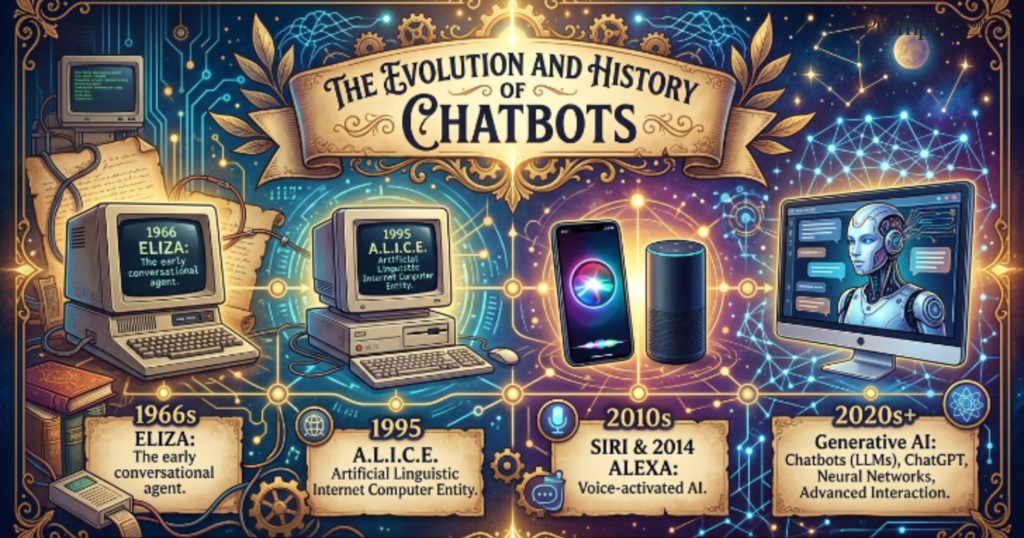
The upward thrust of generative AI has absolutely transformed the industry. Agencies now build corporate chatbot systems powered by conversational interfaces, AI digital assistant technology, and clever assistants. Present-day bots analyze user interactions and enhance constantly. This shift created advanced structures like ChatGPT, Google Gemini, and other pleasant AI chatbots in 2026, used by international businesses.
Chatbot Era | Main Technology | Features |
Early Bots | Rule Systems | Fixed replies |
NLP Bots | Language Processing | Better understanding |
AI Chatbots | Machine Learning | Smarter conversations |
Generative AI Bots | LLMs and Deep Learning | Human-like responses |
How Chatbots Work
Many people ask, “How do chatbots perform in real situations? AI chatbots gather personal input and examine the meaning through the usage of natural language processing and verbal knowledge. Then the device predicts the pleasant answer using educated models and big datasets. Modern-day systems additionally use chatbot education, chatbot verbal exchange drift, and AI chatbot education statistics to enhance performance over the years.
Advanced bots use huge language fashions, AI workflow automation, and conversational analytics to create greater, clever replies. As an example, a buying chatbot can apprehend a client soliciting for winter shoes and suggest merchandise at once. This method combines chatbot integration, AI automation, and automatic responses to create rapid and personalized interactions.
Types of Chatbots
Special chatbot sorts serve different purposes. A rule-based chatbot makes use of predefined responses and selection trees. Those systems work nicely for fundamental patron questions. In contrast, AI chatbots use deep mastering AI, AI-powered customer service, and predictive systems to comprehend complex requests and adapt obviously.
Organizations additionally use voice-enabled chatbot systems, digital assistants, and hybrid ai fashions. Some industries choose specialised bots, such as a chatbot for healthcare or a chatbot for e-exchange structures. Those systems enhance workflows and create more efficient patron reports through ai self-care answers and advanced chatbot answers.
AI Chatbots vs Rule-Based Chatbots
The distinction between a chatbot and an AI chatbot turns into clean when users ask distinct questions. Rule-based bots mainly respond to programmed instructions. AI chatbots understand meaning, emotion, and context using machine learning in chatbots and chatbot personalization functions. This creates smoother and more human conversations.
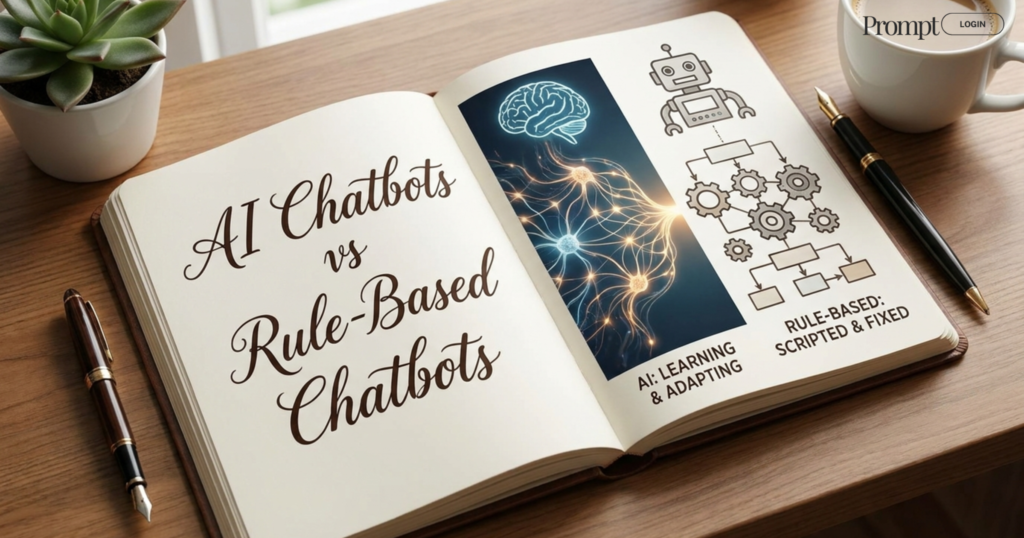
Businesses now prefer AI structures because they offer a more potent AI chatbot user experience and higher patron engagement. Even as rule-based structures cost much less initially, AI structures enhance long-term growth through AI chatbot workflow automation, chatbot reaction automation, and intelligent aid tools. Cutting-edge companies regularly combine each technology for max performance.
Feature | Rule-Based Chatbot | AI Chatbot |
Learning Ability | Limited | Self-learning |
Responses | Fixed | Dynamic |
Language Understanding | Basic | Advanced |
Customer Experience | Simple | Personalized |
Scalability | Moderate | High |
Key Features of Modern AI Chatbots
Modern AI chatbots encompass powerful abilities that enhance client experience. Capabilities like chatbot personalization, AI-powered conversations, and AI support structures allow corporations to offer tailored guidelines. The only shape additionally consists of guide voice instructions, multilingual verbal exchange, and clever mission automation.
Many companies now use CRM chatbot integration, chatbot integration with CRM, and the chatbot platform era to connect aid equipment with internal enterprise structures. This improves workflows and enables smarter AI customer service reports. Superior bots can also examine purchaser conduct and are expecting future wishes using AI chatbot analytics.
Learn More: AI LIST TITAN Review 2026 – A Smarter Way to Find Buyer Leads and Grow Faster
Common Uses of Chatbots in Different Industries
Chatbots now feature at some stage in the healthcare, finance, training, retail, and customer support industries. Businesses use chatbots for customer service, chatbot lead technology, and chatbot advertising and advertising techniques to beautify conversations and improve earnings. Hospitals use bots for appointment scheduling at the same time as banks automate account help through AI structures.
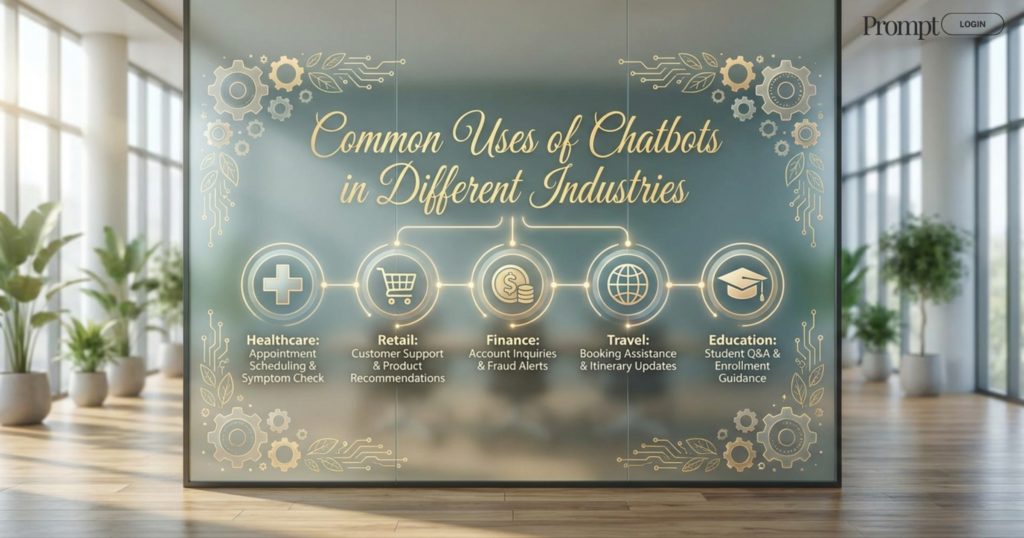
E-commerce manufacturers depend closely on chatbot packages in healthcare and e-commerce, AI chatbot examples for websites, and clever aid systems. Retail corporations use bots to advocate products and answer questions right now. Hr groups additionally use chatbots for employee support to manipulate internal requests and automate repetitive tasks.
“AI chatbots are not optional gear. They’re becoming the virtual front table of contemporary corporations.”
Benefits of Using AI Chatbots
The benefits of AI chatbots are transforming business operations internationally. Groups keep cash because bots resolve thousands of questions automatically. AI structures enhance velocity and decrease ready instances thru ai-powered customer service and green AI chatbot deployment processes.
Some other primary gain is scalability. Organizations can serve customers 24/7 without developing staffing fees. AI bots additionally enhance chatbot consumer experience, increase loyalty, and create better engagement by personalizing conversations. Many organizations now depend upon the benefits of conversational AI chatbots to remain competitive in fast-shifting industries.
Challenges and Limitations of Chatbots
No matter their benefits, chatbots nonetheless face challenges. Some systems produce erroneous solutions because of terrible schooling records or weak chatbot development practices. Businesses also face AI chatbot obstacles, in particular, while bots struggle to recognize emotions or unusual requests.
Protection is any other important subject. Organizations coping with sensitive consumer statistics should manipulate ai chatbot protection risks and chatbot security and privacy risks. Bad safety can reveal private business data. That is why groups make investments closely in easy-to-use employer AI chatbot answers and superior tracking systems.
The Future of AI Chatbots in 2026 and Beyond
The destiny of conversational AI generation seems extraordinarily advanced. AI chatbots become extra personalized, emotional, and self-sufficient. Professionals predict that destiny bots will combine video, voice, and textual content communication into seamless digital experiences powered by generative AI programs and advanced neural networks.
Organizations will continue to expand conversational AI platforms, virtual assistant software programs, and AI chatbots for agencies to improve automation and client engagement. Future structures can also even act independently, finishing tasks with the aid of finishing tasks without human assistance. Those improvements are using primary AI chatbot developments in 2026 across the American era market.
Frequently Asked Questions
Is ChatGPT AI the same as ChatGPT?
No, chatgpt ai is a huge time period for conversational software program, at the same time as chatgpt is a particular ai chatbot created with the resource of using openai the use of advanced language models.
Is chatbot AI safe to use?
Yes, most chatbot AI systems are comfy when used on reliable systems with the proper privacy and protection measures in place.
Is chatbot AI free to use?
Many chatbot AI platforms provide constrained variations with restricted functions, at the same time as advanced gear and business plans typically require a charge.
What does God say about AI?
Non-secular texts do no longer immediately point out ai; however, many human beings receive that ai wishes for use responsibly and ethically to assist humanity.
Final Thoughts
AI chatbots are abruptly converting how companies interact with clients online. From healthcare to e-commerce, businesses now rely upon superior chatbot systems to automate communication and enhance digital reports. Clever AI systems powered through chatbot software program applications, AI automation, and predictive analytics are becoming critical for industrial employer systems.
As generations evolve, chatbots emerge as more realistic and human-like. Corporations that adopt contemporary conversational AI traits early will have the advantage of in stronger purchaser relationships and improved operational efficiency. The chatbot revolution has already begun, and it will most efficiently develop stronger inside the coming years.

